The jewelry and crafts listed on this site are made by Native Americans living in the Four Corners area of the Southwest, USA. The Four Corners area is located where the corners of Arizona, New Mexico, Utah, and Colorado meet. There are many tribes living in this area, to name a few: Navajo, Zuni, Apache, Acuma, Pueblo, and others. As Traders began opening Posts on or near the reservations Natives began making jewelry and crafts for commercial use instead of the traditional personal and tribal use. Rugs, blankets, clothing, armament and accessories, with jewelry becoming the most popular among the newly acknowledged arts. It wasn’t long before some nefarious traders found a way to have the jewelry copied and made overseas at a cheeper cost. By flooding the market they almost crushed the fragile economic system that was becoming popular on the reservations. Natives cried foul. The Federal Government attempted to step in and protect the authenticity of Native made art. The individuals in charge decided to have the artists initial each of their pieces, than the agents would individually stamp them before releasing each piece to the public for sale. This didn’t work well. It just took too long and it didn’t stem the flow of fakes into the country. Although, the use of hallmarks has continued. They are somewhat useful in recognizing the authenticity of well known artists.Even now “fakes” come in from other countries with initials stamped on them. Once they are cast among the general population they could be mistaken for Native made.
A little about Turquoise.
Turquoise is a mineral deposit usually found near copper deposits which leach into the rock giving it its beautiful shades of bliue. Turquoise is known as one of the softer stones. It falls into the mid range of the Mohs hardness with variations up and down from there. The softer Turquoise most Turquoise mined today, has been stabilized by infusing it with hardening agents. This helps maintain color and fills porous areas to maintain consistent hardness while working with the stones. Enhancing color is also popular, it helps make use of softer turquoise deposits while not impinging on the value and desirability of the natural harder stones.
Native American’s also use a variety of other gem stones to enhance their inventory.
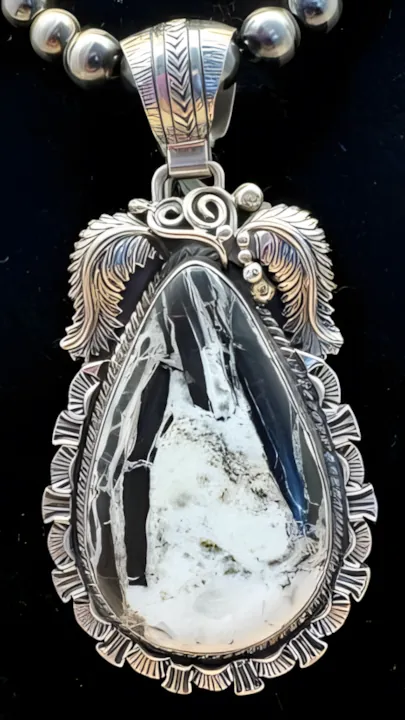
White Buffalo stone from Nevada and Charoite from Russia are two of the most popular of those stones.
Coral and Malachite also remain favorites along with Spiny Oyster Shell.
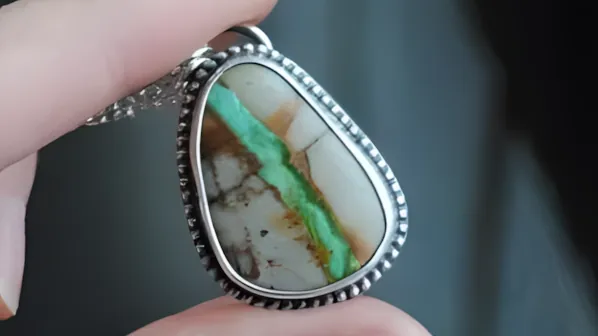
The small strips of turquoise found in the natural matrix are called Boulder or Ribbon Turquoise. Royston Ribbon, from The Royston mine in Nevada, is the most famous of the boulder turquoise and the most sought after.